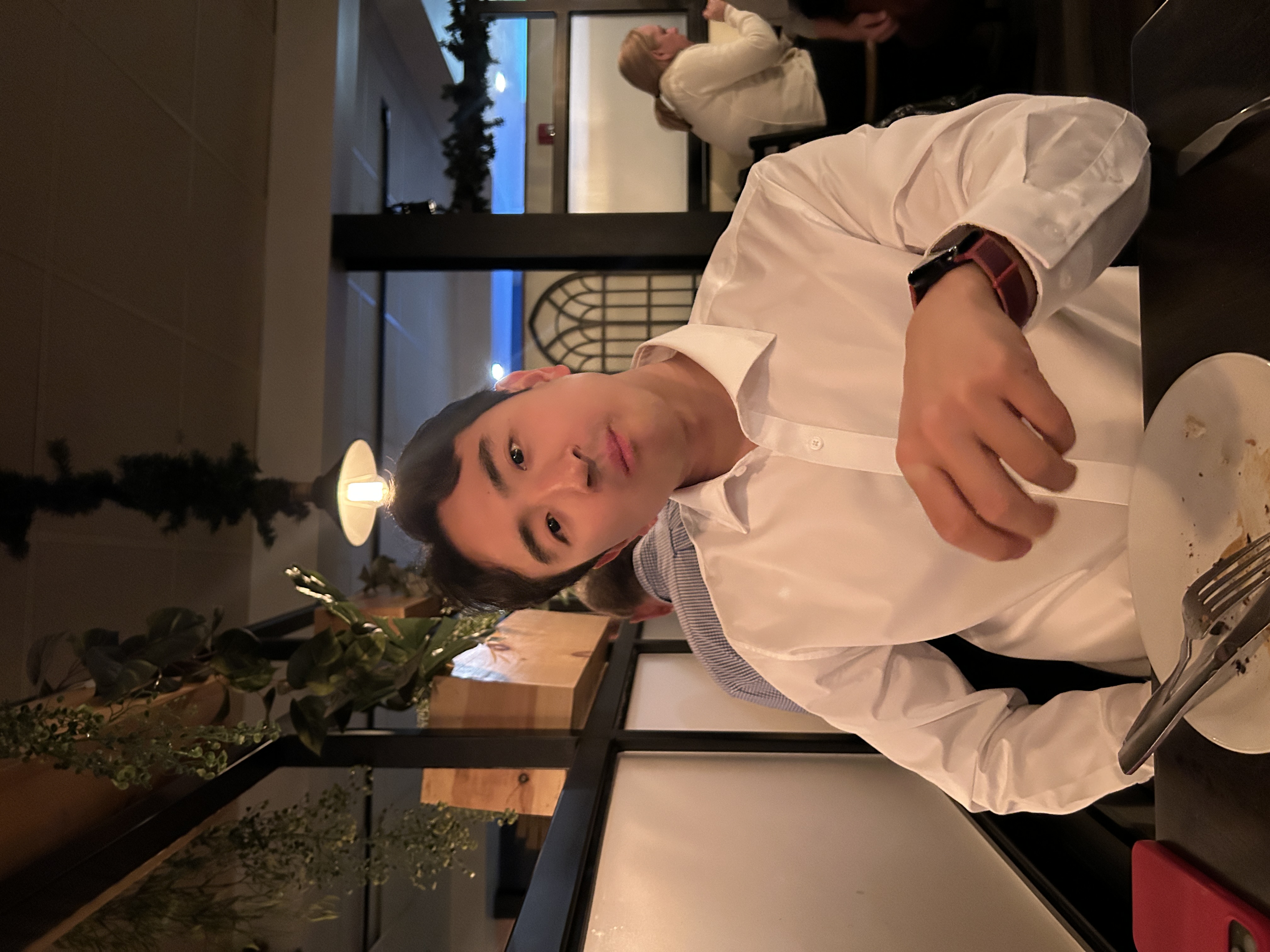
Hi! I am a PhD candidate in the Department of Philosophy at Syracuse University. I work on free will, interested in both the metaphysical and ethical questions surrounding it. Before coming to Syracuse, I earned my BA in Philosophy and Cognitive Science from the University of Toronto.
The name in brackets is my Korean name. I publish under Chris Cho.
According to structuralism, or non-historicism, whether an agent is morally responsible for some action or not depends solely on her non-historical or structural properties at the time of action and not also on the history by which that structure was produced. Manipulation cases pose a sharp challenge to this view: Can’t agents be manipulated to satisfy the very structural conditions that make an ordinary agent responsible? Surely, they are excused. In this dissertation, I offer a hard-line response to manipulation cases, arguing that manipulated agents are morally responsible in virtue of satisfying certain structural conditions structuralists find sufficient for responsibility. I therefore defend what I call hard-line structuralism, a view built on both the hard-line response and what I take to be the most plausible structuralist account.
Soft-line compatibilism has come to occupy a privileged position in the debate over manipulation arguments against compatibilism. By identifying a responsibility-relevant difference between manipulated and ordinary agents, soft-liners promise to accommodate the intuition that manipulated agents are not responsible while preserving ordinary responsibility judgments. I argue that this promise cannot be kept. Soft-liners face a dilemma. On one hand, if the conditions they identify as responsibility-undermining fully excuse manipulated agents, they commit themselves to a form of responsibility skepticism, since structurally similar forms of influence pervade ordinary agency as well. If, on the other hand, soft-liners maintain that manipulation merely mitigates rather than eliminates responsibility, they abandon the no-responsibility intuition that motivates their view in the first place, and collapse into a hard-line position. Either way, soft-lining loses its dialectical advantage. The upshot is that the most promising compatibilist response to manipulation arguments must engage directly with the hard-line strategy, explaining why the no-responsibility intuition is ultimately to be resisted.
Many find it plausible that acting freely requires a kind of sensitivity to reasons. Modalists define this sensitivity in terms of what S does in the relevant alternative possibilities. Agent modalists take S to be an agent, assessing their reasons-sensitivity by considering what the agent would have done in those possibilities. While intuitive, agent modalists struggle with Frankfurt cases. This has led some to a mechanism-based approach. Here, I raise two objections to this approach and defend agent modalism. I argue that (1) the mechanism approach permits composite mechanisms, leading to an unattractive disjunction, and (2) excluding the agent undermines the original appeal of reasons-sensitivity. I defend agent modalism by arguing it can handle Frankfurt cases if it holds fixed the nonoccurrence of agent-altering events. This requirement also helps address rational blind spots. Thus, I aim to rehabilitate agent modalism as a viable account of reasons-sensitivity in free action.
Soft-line structuralists hold that there is a morally relevant difference between manipulated and non-manipulated agents that warrants excusing the former but not the latter. In this paper, I argue that soft-line structuralism is untenable, taking Matheson's (2019) account as a representative case. I raise a counterexample to his view and argue that the most plausible response to the counterexample ultimately undermines soft-line structuralism more generally.
Can manipulated agents be morally responsible for what they do? According to hard-line structuralism, yes. On this view, manipulated agents are responsible in virtue of satisfying the relevant structural conditions taken to be sufficient for responsibility. Historicists disagree, claiming that responsibility also has a historical dimension. Here, I offer a two-step defense of hard-line structuralism. The first is deflationary: I argue that the kind of manipulation that best serves the historicists entails certain structural properties that already meet the normative demands historicists invoke to justify historical conditions. The second is debunking: I argue that our reluctance to attribute responsibility to manipulated agents stems from an anchoring bias toward their pre-manipulation psychology, a bias that lacks normative justification.
Works in Progress
A paper about modalist reasons-sensitivityDraft available
A paper about Frankfurt-style omission casesDraft available
Presentations
"Towards Agent Modalist Reasons-Sensitivity"Eastern APA (Poster) · January 2026
"Manipulation and Hard-line Structuralism"Working Papers, Syracuse University · April 2025
"Towards Agent Modalist Reasons-Sensitivity"Free Will and Agency Conference, Florida State University · October 2024
"Responding to Cyr: A Defense of Historicism"Graduate Philosophy Conference, University of Iowa · April 2024
"Is there a duty to adopt? Evaluating the Assistance Argument"SPEL Conference, Binghamton University · November 2023
Teaching
I am a dedicated teacher who believes that philosophy, done well, should be fun, engaging, and accessible. I strive to create a classroom environment where students feel comfortable wrestling with difficult ideas, and where abstract philosophical questions are brought to life through concrete examples and open discussion.
A full record of my teaching experience is listed below. My teaching portfolio is available here.
As Primary Instructor
Introduction to Moral Theory
Syracuse University · Spring 2026, Summer 2026
Theories of Knowledge and Reality
Syracuse University · Summer 2025, Fall 2025
As Teaching Assistant
Critical Thinking
Syracuse University · Spring 2025 · for Josh Hunt
Human Nature
Syracuse University · Fall 2024 · for Pam Ryan
Logic
Syracuse University · Spring 2024 · for Michael Rieppel
Theories of Knowledge and Reality
Syracuse University · Fall 2023 · for Robert van Gulick
Logic
Syracuse University · Spring 2023 · for Mark Heller